

If you care about living longer and living better, VO₂ max belongs at the top of your dashboard.
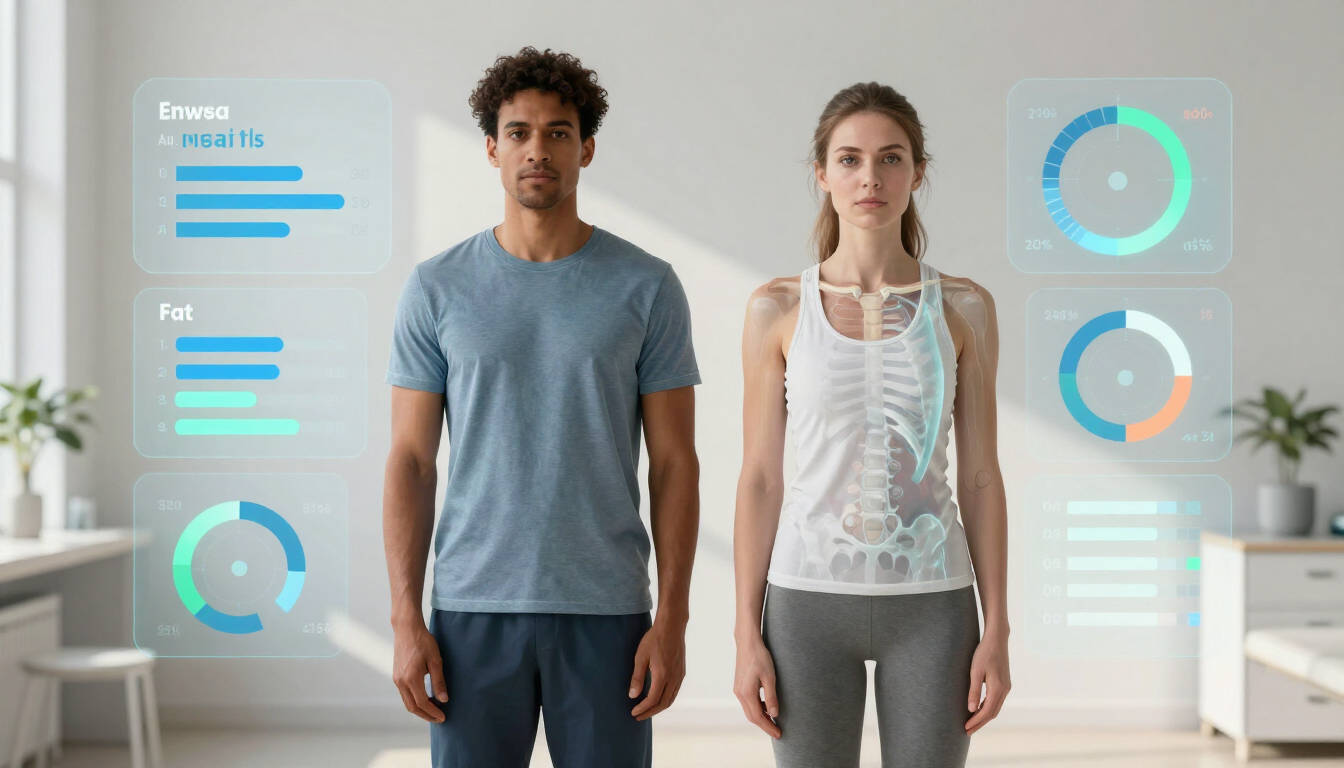
At NuVitale in Suwanee, we take VO₂ max out of the abstract and turn it into actionable training. We pair lab-grade testing with DEXA body composition, PNOE metabolic analysis, movement screening, and a coordinated plan across cardio, strength, recovery, and nutrition.
We do not guess, we test—then we program.
Whether you are an athlete chasing performance or simply want more energy and a longer, healthier life, understanding your VO₂ max can dramatically improve your healthspan.
Here is how VO₂ max works, what a good score looks like, how often to retest, and how we integrate your data into one clear, results-focused plan.
What VO₂ Max Measures — and Why It Matters
VO₂ max is the maximum rate at which your body can take in, transport, and use oxygen during intense exercise.
It is typically measured in milliliters of oxygen per kilogram of body weight per minute (mL/kg/min).
A higher VO₂ max is associated with:
- Lower all-cause mortality risk
- Better cardiovascular fitness
- Improved mitochondrial function
- Greater work capacity
Longevity experts such as Peter Attia and Andrew Huberman emphasize VO₂ max because it is:
- Trainable throughout life
- Predictive of endurance and resilience
- A practical metric that guides heart-rate zones, intervals, and recovery
A single number never tells the entire story, but it provides a powerful foundation for lifelong health.
How VO₂ Max Is Tested
Gold-standard testing uses a graded exercise test performed on either:
- A treadmill
- A cycle ergometer
while a metabolic cart measures oxygen consumption and carbon dioxide production breath by breath.
At NuVitale, clinician-supervised PNOE protocols gradually increase speed or resistance until maximal effort is reached.
Throughout testing we monitor:
- Heart rate
- Ventilatory thresholds
- Respiratory Exchange Ratio (RER)
- Perceived exertion
to accurately determine your training zones.
Before Your Test
- Arrive well hydrated.
- Avoid heavy meals for 2–3 hours beforehand.
- Avoid strenuous exercise for 24 hours before testing.
- Bring running or cycling shoes.
- Bring any prescribed inhalers.
- Bring a current medication list.
Most visits last 45–60 minutes, including setup, testing, and an initial review of results.
Many patients combine VO₂ Max testing with DEXA and resting metabolic testing during one appointment.
Inside PNOE: 23 Biomarkers From a Single Breath
PNOE is a clinical-grade cardiometabolic analyzer that measures 23 biomarkers using approximately ten minutes of breathing through a mask.
No blood draw.
No laboratory wait.
Using indirect calorimetry, PNOE measures oxygen consumption and carbon dioxide production breath by breath to evaluate how oxygen moves through your lungs, heart, and cells.
The biomarkers fall into four major categories.
Pulmonary & Respiratory Function
Measures include:
- Breathing frequency
- Tidal volume
- Minute ventilation
- Forced expired volume
- Ventilatory efficiency (VE/VCO₂)
- End-tidal CO₂ and O₂
- Expired gas fractions
These measurements reveal how efficiently you exchange oxygen and carbon dioxide.
Cardiovascular & Circulatory Health
Evaluates:
- Heart rate
- Heart Rate Variability (HRV)
- O₂ pulse
- Oxygen-to-breathing-frequency ratio
O₂ pulse provides insight into how much oxygen your heart delivers with each beat.
Metabolic Function & Energy Use
Measures include:
- VO₂ Peak (VO₂ Max)
- Carbon dioxide production
- Respiratory Exchange Ratio (RER)
- Total calorie expenditure
- Fat oxidation
- Carbohydrate oxidation
- Mechanical efficiency
- Crossover point (when the body shifts from primarily burning fat to carbohydrates)
Performance & Threshold Markers
PNOE determines:
- Aerobic threshold
- Anaerobic threshold
These measurements establish personalized training zones rather than relying on generic age-based formulas.
One ten-minute breath test. Twenty-three biomarkers. The difference between guessing your zones and knowing them.
Your Five Training Zones — and Your Fat-Burn Sweet Spot
Most heart-rate calculators estimate zones using formulas such as:
220 − age
The problem is that these formulas often miss your true physiology.
PNOE directly measures your thresholds and crossover point, allowing training to match your metabolism.
Zone 1 — Recovery
Easy conversational effort.
Primary goal:
- Recovery
- Blood flow
Fuel source:
- Mostly fat
Zone 2 — Aerobic Base & Fat Burning
Often considered the longevity zone.
Benefits include:
- Improved mitochondrial density
- Better metabolic flexibility
- Maximum fat oxidation
Zone 3 — Tempo
Moderately difficult effort.
Fuel gradually shifts toward carbohydrates.
Zone 4 — Threshold
Built around your measured anaerobic threshold.
Improves the pace or power you can sustain over time.
Zone 5 — VO₂ Max
Short, high-intensity intervals designed to increase your maximum aerobic capacity.
FatMax and the Crossover Point
One of the most valuable outcomes of PNOE testing is identifying:
- FatMax
- Your crossover point
The crossover point is where your body transitions from primarily burning fat to primarily burning carbohydrates.
Knowing this allows clinicians to prescribe the exact heart rate or pace that maximizes fat burning.
For weight loss:
- Better fat oxidation
- Improved metabolic flexibility
For athletes:
- Higher endurance
- Improved threshold performance
- Better fuel utilization
Rather than using generalized charts, your program is built around your actual physiology.
What Is a Good VO₂ Max?
VO₂ Max varies according to:
- Age
- Sex
- Sport
- Training history
- Altitude
General reference ranges include:
Recreationally Active Adults
- Men: Mid-30s to low-40s mL/kg/min
- Women: High-20s to mid-30s
Trained Endurance Athletes
- Men: 50s–60s
- Women: 40s–50s
Elite Athletes
- Men: Above 70
- Women: Above 60
Reported examples include:
- Lance Armstrong: Mid-to-high 80s
- Michael Phelps: Approximately 50s to low 60s
Your individual progress over time is more important than comparisons with others.
Are Wearables Accurate?
Devices such as the Apple Watch estimate VO₂ Max using:
- Heart rate
- Pace
- Algorithms
They can be useful for tracking trends.
However, wearable estimates cannot accurately determine:
- Ventilatory thresholds
- Fat-burning zones
- Individualized training prescriptions
Laboratory testing remains the gold standard for precision.
The NuVitale Difference: One Test, One Team, One Coordinated Plan
VO₂ Max testing is integrated with:
- DEXA body composition
- PNOE metabolic testing
- Movement screening
- Sports chiropractic evaluation
- Strength and conditioning
- Recovery strategies
- Nutrition planning
This creates one coordinated performance and longevity program.
Your Visit: Prep, Test Day, Results & Retesting
Preparation
- Schedule online, by phone, or by text.
- Wear comfortable workout clothing.
- Arrive hydrated.
Test Day
Following a safety screening:
- You'll be fitted with a breathing mask.
- Complete a graded exercise protocol.
- Exercise for approximately 10–15 minutes.
Afterward, your preliminary report is generated.
Results Review
A clinician reviews:
- VO₂ Max
- Ventilatory thresholds
- Heart-rate zones
- Power zones
- Fuel utilization
You'll leave with individualized:
- Zone 2 targets
- Tempo intervals
- Threshold workouts
- Recovery recommendations
Retesting
Recommended schedule:
- Every 8–12 weeks during performance training or body recomposition
- Every 3–6 months for longevity monitoring
Practical Details: Access, Cost & Coverage
NuVitale is located at:
4245 Johns Creek Parkway, Suite A
Suwanee, Georgia
Services include:
- In-person appointments
- Telehealth consultations
- Same-day appointments when available
Many diagnostic tests can be completed during a single visit.
VO₂ Max testing may be:
- Self-pay
- Insurance-billed when medically necessary
Coverage varies by insurance plan.
Additional payment options include:
- Cherry financing
- HSA/FSA eligibility when appropriate
How We Use Your Numbers to Raise Your Ceiling
Your data becomes actionable through:
- Zone 2 prescriptions that improve mitochondrial density without overtraining
- Tempo and threshold progressions that steadily increase VO₂ Max
- Strength programming that preserves lean muscle while increasing power and insulin sensitivity
- Recovery protocols supporting sleep, autonomic balance, and connective tissue health
- Nutrition plans matched to your fuel-utilization profile, including carbohydrate timing and protein goals
Your hormone physician, chiropractor, and performance coach all work together to coordinate your care and help you continue progressing safely.
Frequently Asked Questions
How do you get tested for VO₂ Max?
Schedule a graded exercise test using a metabolic cart.
At NuVitale, treadmill and cycling protocols combined with breath analysis determine true maximal effort and individualized training zones.
Where can I test my VO₂ Max?
Visit NuVitale in Suwanee, Georgia.
Many patients bundle:
- VO₂ Max
- DEXA
- PNOE
into one appointment.
Are VO₂ Max tests worth it?
Yes.
If you want better performance or objective longevity metrics, VO₂ Max testing provides:
- Precise heart-rate zones
- Better interval training
- Faster progress
- Reduced "junk miles"
Can I test my own VO₂ Max?
You can estimate VO₂ Max with field tests or wearables, but laboratory testing provides the most accurate results and individualized training thresholds.
How much does testing cost?
Pricing varies depending on whether VO₂ Max testing is performed alone or combined with additional diagnostics.
Payment options and packages are reviewed before scheduling.
Will insurance cover testing?
Sometimes.
Coverage depends on medical necessity and your insurance plan.
HSA/FSA receipts are available when appropriate.
Is the Apple Watch accurate?
Useful for trends.
Not sufficiently accurate for individualized training prescriptions.
What was Lance Armstrong's VO₂ Max?
Public reports place it in the mid-to-high 80s mL/kg/min, depending on testing conditions.
What was Michael Phelps' VO₂ Max?
Public reports suggest a VO₂ Max in the 50s to low 60s, although values vary by testing protocol.
What is PNOE?
PNOE is a clinical-grade breath analyzer that measures 23 biomarkers, including:
- VO₂ Max
- Fat burning
- Carbohydrate utilization
- Resting metabolic rate
- Breathing efficiency
- Heart-rate response
- Aerobic and anaerobic thresholds
How does PNOE find my fat-burning zone?
By identifying:
- FatMax
- Your crossover point
This allows clinicians to prescribe the exact heart rate or pace that maximizes fat oxidation.
Is VO₂ Max testing only for athletes?
No.
Athletes use it to improve performance, but it is equally valuable for:
- Longevity
- Weight management
- Fat burning
- Preserving lean muscle
- Building long-term cardiovascular fitness
About the Author
Dr. Nadine Halliburton-Foster, MD
Chief Medical Officer of NuVitale Life. Dr. Halliburton-Foster specializes in preventive medicine, hormone optimization, metabolic health, longevity-focused care, and personalized wellness strategies designed to help patients maximize their healthspan, vitality, and quality of life.
See your engine, then raise it.
Call or text (678) 304-0480, email info@nuvitalelife.com, or schedule your VO₂ Max test and integrated performance consultation to build a personalized plan for better fitness, performance, and longevity.